The return on investment (ROI) of employee wellness programs is no longer just a soft HR conversation. Finance leaders want to know what a program costs, what behavior it alters, how success will be measured, and whether the underlying business case holds up long after launch.
Proving a positive return does not require every wellness benefit to yield immediate, multi-million-dollar medical claim reductions. The secret lies in decoupling hard, direct financial savings from broader organizational value—then reporting both through a structured framework CFOs respect.
This guide delivers a practical, CFO-ready model to help HR, benefits, and finance leaders evaluate the ROI of employee wellness programs accurately.
Key Takeaways
- Connect Metrics to Hard Data: Wellness ROI must tie directly to medical claims trends, absenteeism rates, voluntary turnover expenses, and administrative efficiency—not just soft engagement metrics.
- Participation Financial Impact: High enrollment feels positive, but it does not prove financial returns on its own.
- Separate ROI from VOI: A defensible business case categorizes verified monetary returns (ROI) alongside broader workforce metrics, known as Value on Investment (VOI).
- Structure HSA Options Carefully: HSA-eligible employee benefits improve perceived workforce value, but they must comply with specific IRS rules regarding qualified medical expenses.
- Target Practical Health Friction: Non-traditional benefits—such as ELDR for Business—address practical health data friction by giving employees secure, instant access to medical records, emergency data, and caregiving support.
Why Employee Wellness Programs Need a Stronger Business Case
Many workplace health initiatives launch with optimistic intentions but inadequate financial measurement. Employees may enjoy a new perk, HR might receive favorable survey feedback, and vendors will happily report high sign-up numbers. Yet, when budget review season arrives, finance leaders need far more than registration tallies.
A CFO-ready business case bridges the gap between wellness investments and core operational metrics the company already monitors: medical cost trends, absenteeism, employee retention, overall productivity, and HR overhead.
To build this structure effectively, modern HR leaders rely on the CDC Workplace Health Model, which guides wellness planning through four iterative stages: assessment, planning, implementation, and evaluation.
CDC Workplace Health Model:

The Pitfalls of Modern Wellness Measurement
HR teams routinely struggle to establish workplace wellness ROI because programs often launch before a rigid measurement protocol is established. Common operational gaps include:
- Missing pre-launch baseline data.
- Unrealistically short measurement windows (e.g., expecting claims reductions in 90 days).
- Shallow, generalized vendor reports that track clicks rather than outcomes.
- Unclear cross-departmental ownership for ROI tracking.
An initiative can exhibit modest overall participation yet generate immense value for employees managing chronic conditions, sudden caregiving duties, or complex medical records. Conversely, high-engagement perks (like step-count challenges) may yield minimal long-term financial payoff.
Outcomes to Measure First
Rather than attempting to calculate every potential variable at once, focus initially on metrics finance already understands:
- Medical Claims Trends: Per Employee Per Month (PEPM) healthcare spend adjustments.
- Absenteeism Rates: Direct tracking of unplanned sick leave and missed shifts.
- Voluntary Turnover: Retention changes among key talent segments.
- Preventive Care Utilization: Increases in routine annual checkups and early screenings.
- HR Administrative Overhead: Reduced hours spent helping staff navigate complex medical paperwork or leave requests.
Calculating the ROI of Employee Wellness Programs
At its core, calculating workplace wellness ROI relies on a straightforward financial ratio:

Historically, overall wellness programs average a return of $3 to $6 for every $1 invested. However, achieving these numbers requires auditing both sides of the ledger accurately.
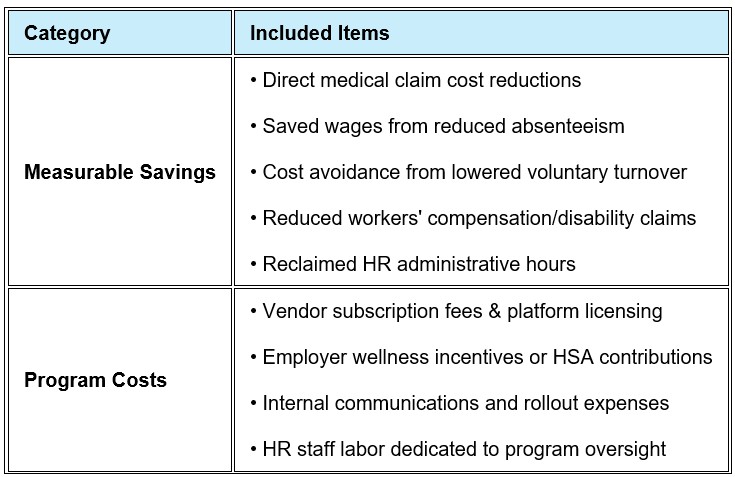
What Counts as Savings vs. Costs?
Industry Benchmarks for Financial Returns
- Healthcare Savings: Research shows targeted programs save an average of $462 per engaged employee annually in healthcare claims. Classic Harvard health studies highlight average medical cost reductions of $3.27 for every dollar spent.
- Absenteeism Costs: Effective interventions decrease lost workdays by 25% to 30%, yielding over $2.70 in saved absenteeism costs per dollar invested.
- Workers' Comp & Disability: Comprehensive wellness initiatives lower workers' compensation and disability expenses by up to 32%.
The Shift from ROI to Value on Investment (VOI)
While hard financial ROI satisfies balance sheets, leading organizations evaluate Value on Investment (VOI) to capture broader organizational impact.
VOI accounts for soft, highly consequential business factors that drive bottom-line results over time:
- Talent Acquisition & Retention: Up to 87% of workers consider health and wellness offerings when selecting an employer. Retaining a high-performing team member avoids costly turnover, which can reach up to 60% of an employee's annual salary.
- Presenteeism & Focus: Employees who maintain balanced health and nutrition report higher daily focus and significantly reduced presenteeism (working while sick or distracted).
- Caregiver & Family Support: Assisting employees who manage medical records or care for aging parents reduces workplace distress and unscheduled absences.
Key Rule: Frame VOI as a supplement to ROI—never a replacement. Present hard savings alongside broader organizational value to build a balanced, realistic business case.
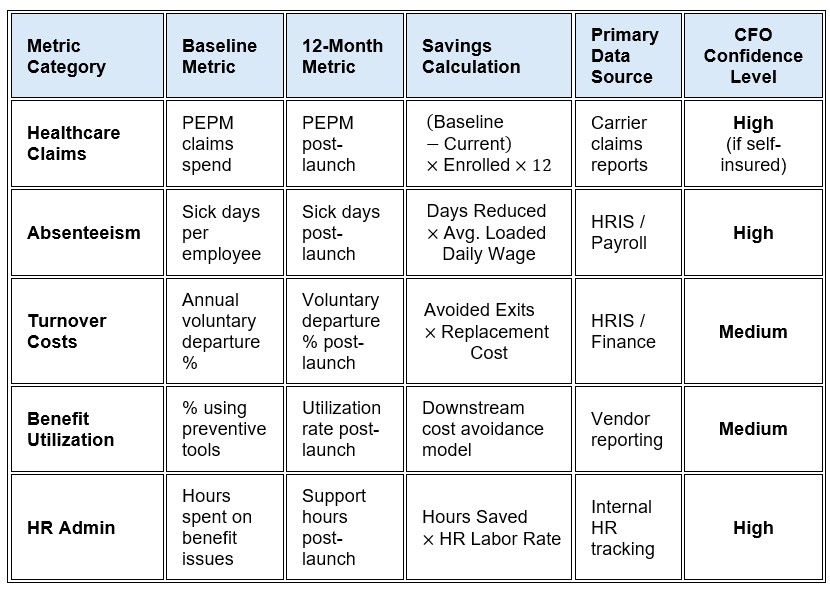
The Practical Wellness ROI Scorecard
Use this standardized scorecard framework to align wellness initiatives with executive expectations:
Scaling the Framework by Company Size
- Small Employers (<100 employees): Focus heavily on absenteeism, retention metrics, and HR time savings. Claims data sets are usually too small to prove statistical significance.
- Mid-Sized Employers (100–1,000 employees): Track claims trends alongside preventive care utilization and department-level absenteeism rates.
- Large Employers (1,000+ employees): Utilize population-level health trends, digital health utilization, caregiver support metrics, and cross-location benchmarks.
What Data Must HR Collect Before Launch?
To establish credible ROI, gather at least 12 months of pre-launch baseline data:
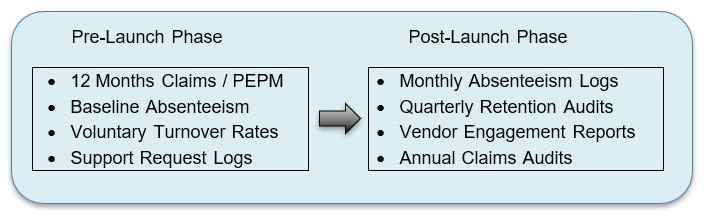
Without these historic reference points, future claims of financial return remain speculative.
Key Drivers of Workplace Wellness Savings
The most defensible ROI models do not rely on exaggerated projections. They focus on measurable operational variables backed by independent research, such as the landmark RAND Workplace Wellness Programs Study, which advocates for conservative financial estimates rather than assuming instant, sweeping claims reductions.
- Healthcare Cost Savings via Prevention & Care Navigation
Proactive prevention and early intervention reduce expensive emergency care and late-stage treatment costs. As outlined in the CDC Workplace Health Promotion guidelines, a coordinated strategy yields healthier workers and controlled long-term claims costs.
When employees have streamlined access to their medical background—including current medications, allergies, past imaging, and lab reports—they navigate care transitions efficiently, avoid redundant diagnostic testing, and reduce care delays.
- Absenteeism Reduction
Absenteeism remains one of the easiest financial levers to quantify. Calculating the expense of lost time requires determining loaded employee compensation:
Digital wellness tools mitigate lost work hours by streamlining appointment preparation, speeding up record retrieval, and helping employees manage personal or family health emergencies swiftly.

- Retention & Benefits Satisfaction
Employee turnover imposes significant financial drag. Modern workforce demographics prioritize benefits that solve daily logistical stresses, as explored in ELDR’s research on generational benefit preferences. Offering modern solutions—like medical record organization and caregiver management—helps employers compete for talent without relying exclusively on salary inflation.
How HSA-Eligible Employee Benefits Boost ROI
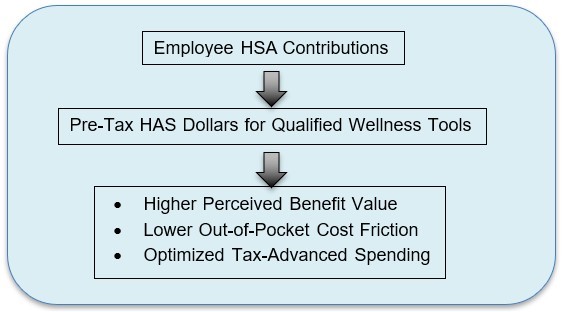
Integrating Health Savings Account (HSA) eligibility into your wellness strategy expands perceived
Navigating IRS Rules for HSA Compliance
Not every health or wellness purchase qualifies for tax-advantaged spending. Per the IRS FAQ on Medical Expenses Related to Nutrition, Wellness, and General Health, general well-being products do not automatically qualify. Expenses must relate directly to the diagnosis, cure, mitigation, treatment, or prevention of disease.
HR and benefits administrators should evaluate IRS Publication 969 alongside legal and tax advisors when designing HSA-compatible benefit offerings.
Digital Health Tools & Health Data Management
A key trend in modern benefits planning is shifting away from underused wellness portals toward functional digital health solutions. For further insights on these shifts, review ELDR's breakdown of employee benefits trends.
Digital tools deliver immediate value when they eliminate operational friction—helping workers store medical histories, handle emergency care logistics, and share health documents seamlessly with specialists.
Streamlining Care Coordination with ELDRforyou
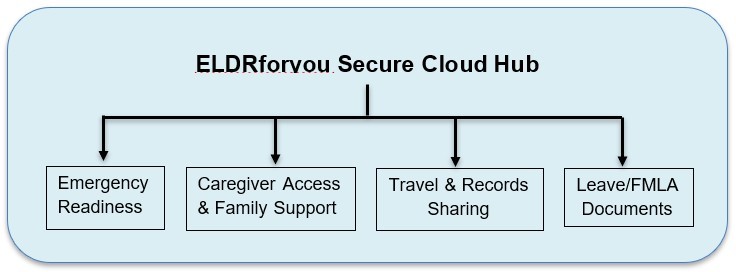
While many programs attempt to enforce broad lifestyle habits, ELDRforyou targets health data readiness.
Through HIPAA-compliant, AWS-cloud-encrypted storage, ELDR gives employees a secure platform to organize, maintain, and share critical health records 24/7.
Key Workforce Use Cases:
- Emergency Preparedness: Instant access to crucial blood types, allergies, and diagnoses during crises.
- Caregiver Efficiency: Streamlined record management for workers caring for aging parents or dependents.
- Reduced Administrative Drag: Faster documentation processing for FMLA, disability, or leave claims.
- Avoidance of Repeated Tests: Easy retrieval of past diagnostic imaging and lab work before seeing new specialists.
By removing these real-world logjams, platforms like ELDR minimize lost work time and decrease administrative friction long before financial results show up in annual claims reviews.
How to Present Your Business Case to Leadership
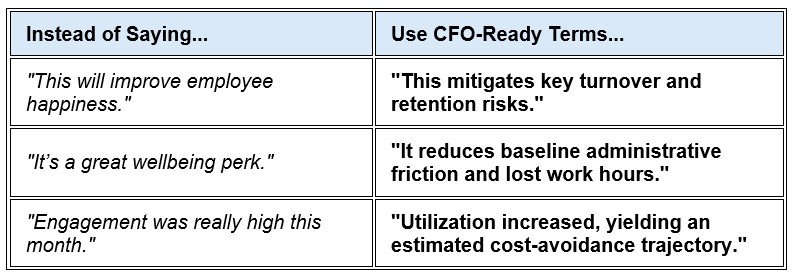
When pitching executives, maintain an executive, numbers-first tone. Avoid excessive HR jargon and ground your request in risk management and financial metrics.
Use CFO-Friendly Terminology
Executive Summary Pitch Template
Present your strategy using a concise, single-page framework:
1. Core Business Problem: High lost work time tied to health logjams and caregiving coordination.
2. Cost Baseline: $3,400 in estimated annual absenteeism and administrative overhead per affected employee.
3. Proposed Solution: Roll out ELDR for Business to provide secure medical data storage and care coordination.
4. Financial Projection: Conservative 2:1 ROI within 12 months based strictly on reduced absenteeism and lower HR administrative burdens.
5. Measurement Cadence: Quarterly review of employee utilization, HR service tickets, and sick leave trends.
Strategic Do's and Don'ts for Wellness Decisions
Academic studies compiled in NIH Workplace Wellness Research confirm that long-term program results depend heavily on program design, operational ease, and target population fit.
Do's
- Track Outcome Metrics: Measure reduced sick leave events, completed preventive visits, and streamlined care navigation alongside basic signup counts.
- Focus on Real Logistics: Choose tools that address clear friction points, such as medical record fragmentation, family caregiving stress, and emergency preparedness.
- Set Realistic Timelines: Expect early indicators (absenteeism, HR hours) in months 6–12, and medical claims shifts in months 18–36.
Don'ts
- Don't Equate Sign-Ups with ROI: High registration rates do not prove direct financial return on their own.
- Don't Overpromise Year-One Claims Cuts: Avoid projecting aggressive medical claims reductions within the first few months.
- Don't Combine ROI and VOI: Keep hard monetary returns distinct from broader qualitative impact metrics.
Building a Measurable Wellness Strategy
Building a CFO-ready business case requires setting grounded baselines, using conservative projections, and tracking metrics finance can verify.
Not every benefit must instantly slash health insurance claims. Practical solutions that reduce employee absenteeism, minimize administrative friction, and help staff navigate care efficiently generate clear, defensible returns.
By offering tools like ELDRforyou for Business, employers empower workers to securely organize, access, and share vital medical data whenever necessary—turning practical support into a high-impact, measurable wellness strategy.
Ready to strengthen your workplace benefits strategy with a practical, HSA-eligible solution? Schedule a consultation for ELDR for Business today to discover how secure medical record storage supports workforce health and drives measurable return on investment.
Frequently Asked Questions
- What is VOI, and how does it differ from ROI?
Value on Investment (VOI) measures broader organizational benefits—such as employee morale, retention, recruiting advantage, and caregiver support—that drive business success but are difficult to isolate on a single balance-sheet line item. While ROI focuses strictly on direct financial returns, VOI measures total workplace impact.
- How long does it take to show measurable wellness program ROI?
Operational metrics like absenteeism, HR support hours, and benefit utilization usually reveal actionable trends within 6 to 12 months. Significant shifts in medical claims trends typically require 18 to 36 months of continuous tracking.
- Are employee wellness benefits HSA-eligible?
Some wellness tools qualify for HSA spending, provided they meet IRS standards for qualified medical expenses. General wellness products do not qualify automatically; they must relate directly to disease prevention, diagnosis, or treatment per IRS guidelines. Consult benefits counsel or tax advisors to verify plan design.
- What is the best baseline metric to track first?
- Absenteeism is often the easiest baseline metric to evaluate because most organizations already track sick time and PTO in their payroll software. It reflects lost productivity directly and reacts faster to wellness interventions than multi-year health claims trends.
References:
External Sources (for EEAT)
● CDC Workplace Health Model: https://www.cdc.gov/workplace-health-promotion/php/model/index.html
● CDC Workplace Health Promotion: https://www.cdc.gov/workplace-health-promotion/php/index.html
● RAND Workplace Wellness Programs Study: https://www.rand.org/pubs/research_reports/RR254.html
● IRS Medical Expenses: Nutrition, Wellness, and General Health FAQs: https://www.irs.gov/individuals/frequently-asked-questions-about-medical-expenses-related-to-nutrition-wellness-and-general-health
● IRS Publication 969: https://www.irs.gov/publications/p969
● NIH: Promoting Health and Wellness in the Workplace: https://pmc.ncbi.nlm.nih.gov/articles/PMC7304414/
● NIH: Workplace Wellness Programs Study: https://pmc.ncbi.nlm.nih.gov/articles/PMC4945172/
● NIH: What Do Workplace Wellness Programs Do?: https://pmc.ncbi.nlm.nih.gov/articles/PMC6756192/
Example Sources
● https://www.sfmic.com/roi-and-voi-a-strong-wellness-program-measures-both/
● https://www.macorva.com/blog/evaluating-roi-for-employee-wellness-programs-updated-insights-for-2025
● https://www.concentra.com/resource-center/articles/what-is-the-roi-for-workplace-wellness-programs/