
ELDR (Electronic Life Directives Repository / Secure Document & Medical Vault) serves as a centralized, secure digital framework designed to bridge the gap between estate legal planning, emergency response, and long-term care management.
For estate planners and elder law attorneys, traditional estate execution often falters not during drafting, but during the operational phase—specifically during sudden health crises, incapacity, or complex long-term care transitions. ELDR addresses these execution gaps by functioning as an active, supportive vehicle for legal professionals, their clients, and designated caregivers.
Core Value Proposition for Attorneys & Estate Planners
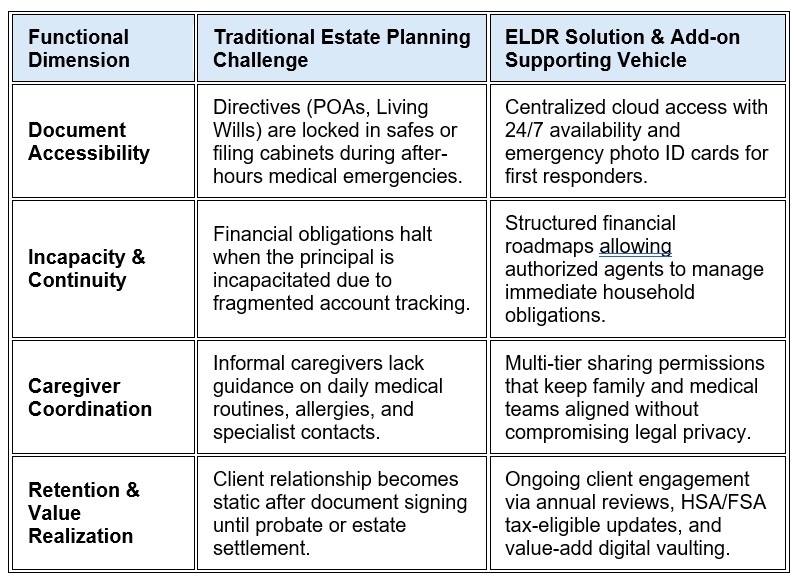
Evaluating ELDR Across Key Practice Pillars
1. Emergency Preparedness & Crisis Access
Estate planning documents such as Healthcare Powers of Attorney (HCPOA), Financial POAs, and Living Wills are ineffective if healthcare providers cannot access them in time.
- Rapid First-Responder Access: ELDR bridges the gap between emergency medical services (EMS) and legal directives by issuing physical ID cards linked directly to medical profiles and critical legal directives.
- HIPAA Compliance & Directives: Ensures that emergency personnel and hospital administration can immediately verify decision-making authority without delaying life-sustaining or comfort-focused care.
2. Modern Caregiving Integration
Elder law increasingly involves assisting family caregivers who face logistical burnout.
- Centralized Health Summaries: ELDR consolidates medication lists, physician contact trees, allergy logs, and surgical history alongside legal frameworks.
- Delegated Granular Access: Estate planners can assist clients in setting granular permissions, ensuring a primary agent holds financial control while a secondary caregiver accesses daily health schedules.
3. Asset Protection & Operational Continuity
Incapacity often creates immediate operational freezes—unpaid mortgages, lapsed insurance policies, and unmanaged small business accounts.
- Digital Life Roadmap: Beyond basic estate documents, ELDR acts as a repository for insurance policies, ongoing household expenses, and asset locations.
- Mitigating Guardianship Risks: By keeping financial directives accessible and clear during sudden incapacity (e.g., stroke, traumatic brain injury), attorneys can help clients avoid costly, public court-supervised guardianship proceedings.
Strategic Integration into Law Practices
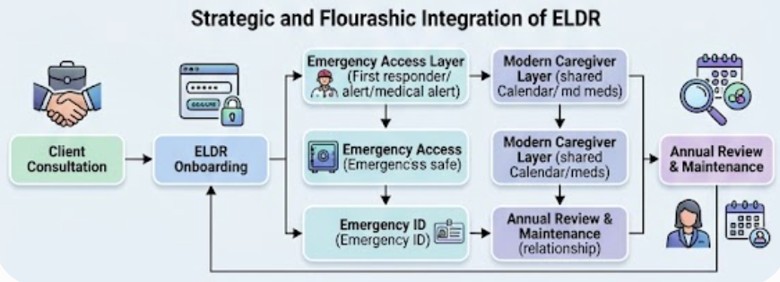
- Strategic Onboarding Package: Attorneys can bundle ELDR setup into premium estate planning packages, transitioning standard document delivery into an interactive, high-value solution.
- HSA/FSA Eligibility Advantage: Because ELDR platform subscriptions are eligible for Health Savings Account (HSA) and Flexible Spending Account (FSA) funds, firms can position this tool as a tax-advantaged component of holistic elder planning.
- Structured Maintenance & Reviews: Utilizing a digital repository encourages clients to engage in regular annual updates (adjusting medications, updating agents, or modifying trust structures) rather than letting plans go obsolete.
ELDR transforms traditional estate plans from static legal instruments into an active, operational ecosystem for emergency response and family caregiving.