
Step into a role as a Financial Power of Attorney (POA) or Successor Trustee, and you quickly realize it is a demanding position. Between tracking down bank accounts, managing property, locating medical directives, and satisfying strict legal duties of transparency, the administrative burden can feel overwhelming.
When acting on someone else's behalf, missing a document isn't just an inconvenience—it can derail health decisions or cause costly legal delays. Organizing information effectively is the key to maintaining control and easing stress.
The Unique Challenges Fiduciaries Face
A fiduciary holds a strict legal obligation to act in another person’s best interest. Serving effectively as a financial agent or healthcare proxy requires overcoming common obstacles:
- Siloed Records: Bank accounts are at one institution, real estate deeds at home, insurance policies online, and medical histories spread across separate patient portals.
- Emergency Pressure: Healthcare proxies are often called to act during medical crises. Scrambling for advanced directives, medication lists, or doctor contacts during an emergency adds unnecessary strain.
- Strict Accountability: Trustees and financial POAs must keep precise records for court accountings, tax filings, or inquiries from beneficiaries.
Setting Up an Emergency Information Architecture
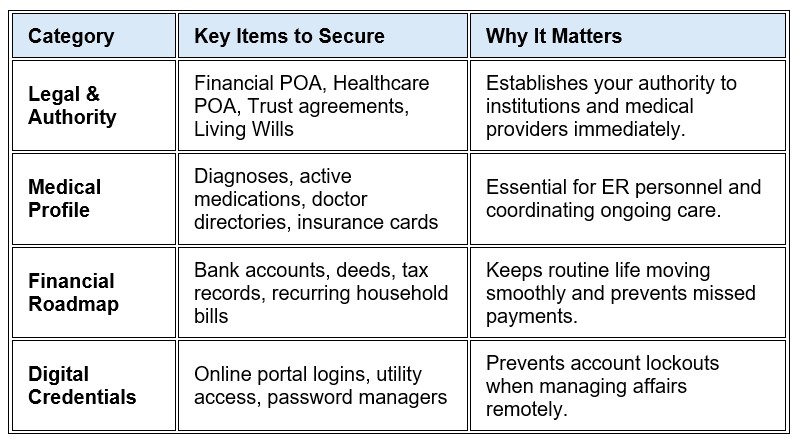
To fulfill your duties without getting bogged down in administrative friction, organize your principal’s records into four core categories:
How ELDR Streamlines Fiduciary Management
Rather than carrying paper folders or risking unsecure emails, fiduciaries use secure digital vaults like ELDR (eldrforyou.com) to centralize sensitive records:
- Instant Access Control: Securely store legal documents, financial instructions, and medical profiles in a single HIPAA-compliant, encrypted vault.
- Emergency Identification: ELDR provides physical Photo ID cards linked directly to vital medical profiles. If your loved one faces an emergency, first responders can access critical details instantly—even if you aren't physically present.
- Permissioned Sharing: Grant specific access to family members, attorneys, or healthcare providers so everyone stays aligned without compromising sensitive data.
Streamlining these obligations reduces stress and helps protect your loved one's legacy. Bringing order to complex documentation lets you focus on what truly matters: delivering the best care possible.